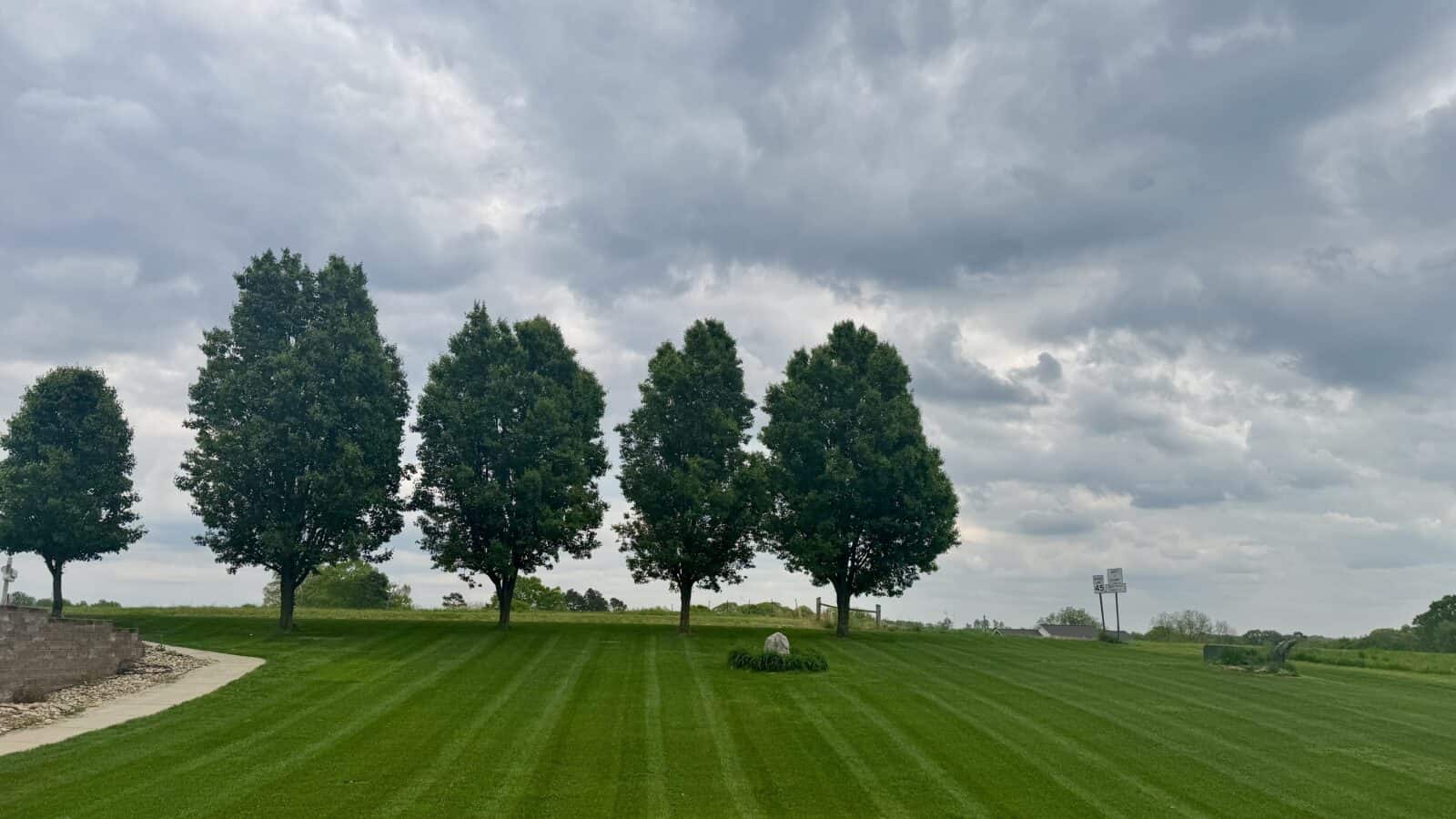
Most weed problems don’t start when you see a weed. They start weeks earlier, when the seed germinates and the lawn doesn’t have enough density to stop it. Pre-emergent is the simplest way to stay ahead of that cycle. But it only works when you understand what it does, what it doesn’t do, and how timing actually works in the Charlotte area and the broader NC Piedmont.
If you want pre-emergent handled as part of a scheduled program, start with our Lawn Treatments service. Not sure if you’re in our coverage area for recurring routes and treatment programs? Check our service area here.
Table of Contents
How Pre-Emergent Weed Control Works in North Carolina Lawns
It prevents many weeds from establishing
Pre-emergent herbicides create a barrier in the soil that stops many weed seedlings as they try to sprout. That’s why it’s so effective when it’s applied before the weed wave starts. In this area, one of the biggest trouble weeds is Dallisgrass, which is notoriously difficult because it aggressively affects both warm and cool-season grasses. Pre-emergents are crucial for preventing the spread of these tough grassy weeds, alongside winter annuals like Henbit and Annual Bluegrass (Poa Annua), and spring invaders like Crabgrass and Goosegrass.
We build our application strategy on these proven soil-barrier mechanics, exactly as validated by the agronomic research from the NC State Weed Science program.
It does not kill existing weeds
If you can already see weeds actively growing, pre-emergent isn’t the tool for that moment. That’s a post-emergent control conversation. This is where homeowners often get frustrated: they apply pre-emergent late and expect it to ‘clean up’ what’s already there.
Spring and Fall Pre-Emergent Timing Windows in the NC Piedmont
Soil temperature matters more than the calendar
In the Charlotte area and the Piedmont, the weather can swing. The air can warm up for a few days, then drop back down. Weeds don’t care about a date on the calendar. They respond to soil conditions. For spring applications, we strictly track soil temperatures to hit that crucial 50-55 degree mark before seeds germinate. This isn’t a guess—our timing windows are directly aligned with the turfgrass agronomy protocols published by NC State TurfFiles.
The right mindset: ‘windows,’ not a single day
Pre-emergent works best when you treat it like a window. Miss the window and you spend the season reacting. Hit the window and the lawn stays cleaner with less effort.
Spring window: stop the first big wave
Spring pre-emergent targets the weeds that surge as soils warm. If you apply too late, you’ll still fight weeds even if you ‘did the thing.’ If you apply early, you’re usually safer than you think—because pre-emergent is about being in place before germination, not waiting for a perfect-looking forecast. This is one reason our scheduled treatment program performs better than one-off DIY timing.
Fall window: protect turf during cool-season pressure
In many local lawns, fall is another key window, especially for cool-season weed pressure. It’s also a prime time to build turf density through proper renovation work. If your lawn is thin, fall is often the moment to fix the baseline through Seeding & Turf Renovation instead of trying to spray your way out of it.
What Pre-Emergent Won’t Fix (and How to Handle It)
Thin turf
A thin lawn gives weeds sunlight and space. Pre-emergent helps, but the long-term win is density. That comes from mowing, nutrition, and renovation when needed. We emphasize turf density as the ultimate weed barrier because it works, a fact heavily supported by the foundational research in NC State’s Carolina Lawns publication.
Bad mowing habits
Scalping is an invitation to weeds. A consistent mowing height and frequency helps turf thicken and makes pre-emergent work better because the lawn is competing instead of collapsing.
Drainage and compaction problems
If water sits in the lawn, turf struggles and weeds find opportunity. If soil is compacted, roots stay shallow and recovery is slower. In those cases, a treatment program should include condition corrections, not just applications.
drainage and compaction issues that affect turf health can often be addressed through proper grading and surface correction.
A Simple Homeowner Checklist
Before you apply anything
- Identify whether you’re dealing with existing weeds (post-emergent) or prevention (pre-emergent).
- Know your turf type and mowing height target.
- Make sure the lawn is being cut consistently so turf can compete.
- Don’t guess at rates—always follow the product label.
If you want the cleanest long-term result
- Use pre-emergent as part of a scheduled program (timing windows matter).
- Pair prevention with turf health basics (mowing + fertility).
- If the lawn is thin, rebuild density instead of doubling down on sprays.
The Science Behind Pre-Emergent Weed Control — Our Research Sources
We don’t guess with your lawn. Every program we build at Morrow Ridge Landscaping is grounded in university-level agronomic science. Here is the research that backs up our approach to pre-emergent care:
- NC State TurfFiles: When to Apply Preemergent Herbicides for Turfgrasses
- NC State TurfFiles: Timing of Preemergent (PRE) Herbicide Applications
- NC State Weed Science: Preemergence Herbicides
- NC State Extension: Carolina Lawns
- NC State Extension: Tall Fescue Lawn Maintenance Calendar
FAQ
Can I apply pre-emergent and seed at the same time? In most cases, no—standard pre-emergents are designed to prevent germination, which is exactly what grass seed needs to do. However, there is one major exception: if you are seeding cool-season grass, an active ingredient called Mesotrione can be used. It is specifically designed to reduce weed pressure during the establishment phase, though it is only effective for about 30 days. Otherwise, if the lawn needs overseeding, the plan has to be sequenced correctly so you’re not working against yourself. If you’re unsure whether you need prevention, renovation, or both, start with Seeding & Turf Renovation.
If I missed spring pre-emergent, is it pointless? No. You can still reduce pressure going forward, but you’ll likely need more targeted post-emergent control and tighter mowing discipline during peak growth. A program can still stabilize the lawn, it just takes a different plan.
How long does pre-emergent last? It depends on the product, rate, and conditions. The better approach is to treat it like a program with a planned window rather than hoping one application covers everything.
Conclusion: pre-emergent is the easiest win—if you treat it like a system
Pre-emergent isn’t complicated. The confusion comes from expecting one application to act like a full-season plan. When you pair correct timing windows with turf health basics, the lawn stays cleaner and maintenance feels simpler.
Ready to stop guessing the calendar and start running a treatment program that actually works? Schedule Your Property Assessment with Morrow Ridge Landscaping and we’ll recommend the right pre-emergent timing and treatment plan for your lawn, your turf type, and your goals.
Call or text: 704-448-9015 | Email: info@morrowridge.com
Explore related services from Morrow Ridge: