| Quick Answer Replacing lawn with native plants works best in the spots where turf was never going to hold: dry shade, wet low ground, slopes too steep to mow, and heavy compacted clay. Figure out which condition you’ve got, match natives to it, kill the existing grass completely before you plant, and expect the bed to look thin through the first year. |
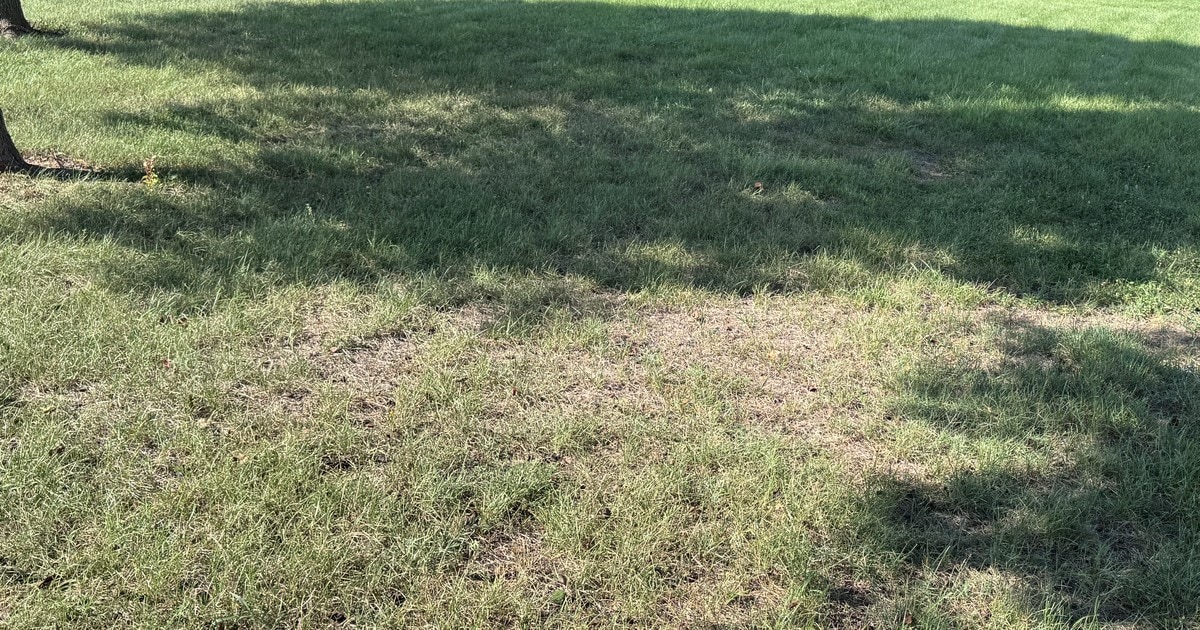
Every fall I get called out to look at the same thing. Somebody has reseeded a thin patch three years running, it keeps coming back thin, and they want to know which seed to buy.
The seed is usually fine.
Grass needs light, drainage, and soil it can actually root into. Short any one of those and what’s in the bag stops mattering. A good share of the chronically thin turf I see across Stanly and Cabarrus Counties is growing somewhere it was never going to work, and reseeding it every September is an annual payment on a decision somebody else made during construction.
So that’s the case for replacing lawn with native plants, and it’s narrower than the argument that usually gets made online. I’m not against lawns. Turf is the best surface there is for the parts of a yard people use. Kids, dogs, chairs, a table, the path out to the shed. Nothing else holds up to getting walked on every day, which is most of why we still install it.
Right plant, right place is the oldest rule in the business. It applies to fescue the same as it applies to a redbud, and most of the arguments I see about lawns online skip right past that part.
Where Lawn Does Not Belong in a Charlotte Area Yard
Four conditions account for most of the failing turf I see across Stanly, Cabarrus, Union, and Mecklenburg Counties. Go walk your property before you start looking at plants.
Do the walk in late summer. In April a bad spot looks about the same as a good one, which is how most of these get missed.
Dry Shade Under Mature Hardwoods
Most common one in the older neighborhoods around Albemarle, Concord, and Mt. Pleasant. Big oaks, maples, and hickories throw heavy summer shade, and they run a mat of feeder roots through the top few inches of soil. The grass is competing for light and losing, and competing with those same roots for water at the same time.
How to check it: stand under the canopy at midday in late summer. Under about four hours of direct or dappled light, fescue won’t hold no matter what you do to it. Then dig a small hole. If you hit a web of roots in the first six inches, you’ve got root competition stacked on top of the shade, and I don’t know of a seeding program that gets around both of those at once.
Wet Low Spots That Stay Soggy
Downspout outfalls, the bottom of a grade change, the flat corner where the whole yard drains. Grass there stays thin, grows moss or algae at the surface, and gets scalped every mow because the deck sinks in.
How to check it: dig a hole twelve to fifteen inches deep and fill it with water. Come back a day later. If water’s still standing, the soil is poorly drained. That’s the test NC State Extension uses, and it costs you an afternoon and a shovel.
Before you plant a thing in it, find out where the water is coming from. A failed grade, a collapsed downspout line, runoff aimed at your foundation. Those are grading problems, and a low spot you’ve decided to keep is worth planting, but one that came from bad construction is a different job, and putting a bed over it hides the problem for about a season before it comes back.
Full Sun Slopes You Should Not Be Mowing
Steeper than roughly 3:1 and you shouldn’t be walking a mower across it, let alone riding one. Slopes shed water instead of taking it in, so a south or west facing bank browns out in August ahead of everything else on the property.
How to check it: if you mow across the face instead of up and down, or you catch yourself bracing a foot so you don’t slide, that’s the one. I’d get off it before somebody gets hurt, separate from anything to do with plants.
Heavy Compacted Clay
Carolina red clay by itself isn’t what’s killing the grass. Most subdivisions around Concord, Harrisburg, and Locust got graded with heavy equipment, the topsoil was stripped off or buried, and what’s under the sod now is a dense subsoil that roots can’t get into and water can’t move through.
How to check it: push a long screwdriver into moist soil. If it stops at three or four inches under steady hand pressure, there’s a compaction layer down there. Turf sitting on compacted red clay stays shallow rooted, which is why those areas go dormant first in a dry August and fill in with knotweed and crabgrass.
What Native Plants Replace Lawn Around Charlotte, NC?
Match the palette to whichever condition you found. Everything below is native to this part of North Carolina, available through premium regional growers rather than big-box stock, and well behaved in a landscape setting. Plenty of natives are too aggressive to put anywhere near a house, and where something on these lists needs room I’ve said so. Check anything you’re considering against the NC Extension Gardener Plant Toolbox before you buy.
Native Plants for Dry Shade
- Christmas fern, Polystichum acrostichoides
- Pennsylvania sedge, Carex pensylvanica
- Green and gold, Chrysogonum virginianum
- Eastern columbine, Aquilegia canadensis
- American alumroot, Heuchera americana
- Solomon’s seal, Polygonatum biflorum
- Arrowwood viburnum, Viburnum dentatum, for shrub structure
- Eastern redbud, Cercis canadensis, for a small understory tree
- American hornbeam, Carpinus caroliniana, for a small understory tree in deeper shade
Pennsylvania sedge is about as close as we get to a native lawn substitute in shade. Low, soft, flowing, and it never sees a mower. It won’t take foot traffic though, so it goes everywhere except the line people actually walk, which usually means running a stepping stone path through it.
Native Plants for Wet Low Spots
- Cardinal flower, Lobelia cardinalis
- Swamp milkweed, Asclepias incarnata
- New York ironweed, Vernonia noveboracensis
- Soft rush, Juncus effusus
- Cinnamon fern, Osmundastrum cinnamomeum
- River oats, Chasmanthium latifolium
- Virginia sweetspire, Itea virginica
- Summersweet, Clethra alnifolia
- Winterberry holly, Ilex verticillata
- Possumhaw viburnum, Viburnum nudum
The corner nobody can mow tends to become the best part of the property once it’s planted this way. It holds water on site instead of pushing it downhill, and you’ll pull more bird activity out of a winterberry and a stand of soft rush than anything else you put in the ground.
Native Plants for Full Sun Slopes
- Little bluestem, Schizachyrium scoparium
- Pink muhly grass, Muhlenbergia capillaris
- Butterfly weed, Asclepias tuberosa
- Threadleaf coreopsis, Coreopsis verticillata
- Narrowleaf mountain mint, Pycnanthemum tenuifolium
- Black-eyed Susan, Rudbeckia fulgida or Rudbeckia hirta
- Aromatic aster, Symphyotrichum oblongifolium
- Fragrant sumac, Rhus aromatica, as a spreading woody binder at the toe of the slope
One caution on that list. Narrowleaf mountain mint spreads by rhizome and keeps spreading. On an open bank that’s fine, and it’s among the better pollinator plants we can put in the ground. I wouldn’t put it in a four foot bed against a walk unless you’re planning on pulling it back every spring.
Bunchgrasses are what hold a bank. Little bluestem roots deep, holds soil, stands up all winter, and goes copper in October. Put the grasses in first and at high density, then work the flowering perennials in around them. People do this backwards, plant a slope mostly in coneflower and coreopsis because that’s what looked good at the garden center, and are still losing soil after a hard rain two years later.
Native Plants for Heavy Compacted Red Clay
- Switchgrass, Panicum virgatum
- Blue false indigo, Baptisia australis
- Purple coneflower, Echinacea purpurea
- Wild bergamot, Monarda fistulosa
- Eastern bluestar, Amsonia tabernaemontana
- New England aster, Symphyotrichum novae-angliae
- American beautyberry, Callicarpa americana
Taproots and coarse root systems are the selection criteria on compacted red clay. Baptisia and switchgrass will push down through a layer that fescue roots stop dead at. Three or four seasons in, they’ve done more for the soil profile than a tiller ever would have. If you’d rather have it specified and installed right the first time, that’s what our planting work covers.
How Do You Remove Existing Turf Before Planting Natives?
This is where most native plantings fail, and they fail before anything gets planted.
Fescue and bermudagrass don’t quit just because you stopped watering. Whatever survives comes up through the new bed the following spring, and at that point you can’t spray it without taking out what you planted, which is why the kill has to be finished before anything goes in the ground.
Three methods work.
Smother it. One layer of cardboard or six to eight sheets of newspaper laid flat over the grass, three inches of weed-free compost or mulch on top, watered in. NC State Extension puts the timeline at three months to a year. Start it in summer while the grass is actively growing. Starting in fall takes longer because the plant is banking energy in the roots instead of spending it.
Spray it. Nonselective herbicide on actively growing turf is the fastest reliable kill. Fescue usually goes down in one or two applications. Bermudagrass takes several, spaced three to four weeks apart, and people quit after the first one and then wonder why it’s back in May. Don’t disturb the soil for at least seven days after you spray. The product has to move down into the rhizomes before you touch anything.
Cut it out. A sod cutter takes the turf and the thatch in one pass. It also takes what’s left of your topsoil, so budget compost to put back.
Four things people get wrong:
- Don’t till. Tilling cuts creeping perennials into pieces and every piece resprouts, and it brings up a decade of buried weed seed on top of that. On compacted red clay a broadfork or an air spade opens the profile without turning it over.
- Don’t solarize. Clear plastic gets recommended constantly online. NC State is direct about it: North Carolina generally doesn’t hold soil temperatures high enough for long enough to control weeds this way, and what benefit exists is mostly in the eastern half of the state.
- Get a soil test. The NCDA lab runs them free most of the year with a fee during the winter peak. It tells you pH and what’s short before you start spending money guessing at amendments.
- Amend the whole bed, not the holes. One to two inches of compost across the full area. Dig a rich pocket into surrounding red clay and you’ve built a bathtub, and the roots will circle around inside it rather than push out into the native soil.
Walking the property in late summer lines up with the kill window, which is worth knowing before you start. Diagnose in August, run the kill through September, and plant from about September 15 into late October. That gives roots two cool seasons before they see their first real summer. Spring planting works too, it just costs you a summer of dragging hose around.
I hold an active North Carolina pesticide applicator license. What that means practically is the herbicide step gets the right product at the right rate at the right time. It’s the part of this most likely to get done wrong by somebody working off a video.
What Does the First Year of a Native Planting Look Like?
It looks thin, and it stays that way longer than most people are prepared for.
Perennials and grasses spend their first season underground. What you can see above the mulch has almost nothing to do with what’s happening below it. Nurseries have been saying sleep, creep, leap for decades and it holds up. The planting you were shown in the design is a third season planting, and nobody puts that on a proposal in a way people actually absorb.
Most of the native beds I’ve been asked to look at after the fact got torn out in August of year one by somebody who was sure it had failed.
What to do in the meantime:
- Space it by layer, not by one number. Shrubs and the long-lived taprooted perennials go in at mature width and stay there. Baptisia, bluestar, beautyberry, sweetspire, winterberry. Those are the ones you can’t correct later, and a baptisia that’s been in the ground three years does not want to be moved. Everything low goes in tight, nine to eighteen inches on center depending on the plant, because that layer is your weed suppression and it’s cheap to pull or divide if it thickens up. The space between your structural plants is where that low layer goes.
- Expect to alter in years three through five. Something will get shaded out, something else will run further than you wanted, and one or two things will die for reasons you’ll never pin down. That’s normal in a planting like this and the fix is usually a shovel in March. Tight spacing photographs beautifully on install day, which is why it tends to get applied to the whole bed when it should only be applied to the low layer.
- Water deep, once a week, all through the first growing season. A daily sprinkle keeps everything shallow. Soak it and then let it dry down, because that wet to dry cycle is what drives roots down into red clay.
- Two to three inches of mulch, kept off the crowns. In year one it’s doing weed suppression more than anything else, so don’t shave the depth to make it look tidy.
- Weed every couple of weeks and pull them small. Open ground around here fills with crabgrass, nutsedge, and Japanese stiltgrass faster than you’d believe, and this is where most of your first year hours are going to go.
- Leave the stems standing over winter. Seedheads feed birds, hollow stems overwinter native bees, and the winter form on little bluestem and switchgrass is half of why you planted it. Cut back in late February or early March.
Second summer the plants start touching each other and the weeding drops off. By the third you’ve stopped seeing mulch at all, and the bed is down to checking on it in spring and cutting back once.
Frequently Asked Questions About Replacing Lawn with Native Plants
Can I just stop mowing and let the area go native?
No. Park the mower around Charlotte and what comes up is broomsedge, Japanese stiltgrass, bermudagrass, Chinese privet, and Bradford pear seedlings. The seed bank and the invasive pressure around us won’t hand you a meadow on their own, and whatever you want in that space has to get put there on purpose.
Is a native planting lower maintenance than lawn?
Lower once it’s established, and different in kind. You trade weekly mowing, fertilizer, and fungicide for periodic weeding, one cutback a year, and altering plants as they spread. The first year runs more work than a lawn does and the third runs quite a bit less, so it depends which year you’re asking about.
When is the best time to plant natives in the Charlotte area?
Fall. Mid-September through late October is the strongest window for perennials, grasses, and woody plants, since the soil is still warm, the air is cooling off, and the plant puts everything it has into roots. Spring works if you miss it, though you’ll be watering all summer to get there.
Will native plants attract ticks?
Ticks move with deer and live in leaf litter, and they’re already in your treeline. A managed planting with defined edges and a path through it doesn’t behave like unmowed brush. Keep a mowed or hardscaped border between the bed and the areas people use, which you’d want anyway.
Will my HOA allow native plant beds?
Depends on your covenants, and they vary a lot between neighborhoods out here. A designed planting with a clean edge, a mowed turf border, and defined bed lines gets approved almost every time. What draws a letter is an undefined patch of tall vegetation that reads like nobody is maintaining it. Read the covenants first, and submit a plan if there’s any question at all.
How much of my yard should I convert to native planting?
Start with one problem area. The dry shade strip on the north side, or the slope you’ve been dreading. Run it on a defined section, find out how the maintenance feels in August, then expand. Converting a whole front yard as a first project is how people end up overwhelmed.
Do native plants need irrigation?
Through the first growing season, yes. Native doesn’t mean it survives being planted and ignored. Once it’s established, a correctly sited planting should carry itself through a normal Charlotte summer without supplemental water.
About the Author
Joey owns and operates Morrow Ridge Landscaping, LLC, a design-build firm based in Stanly County, North Carolina. He’s a Marine Veteran and holds an active North Carolina pesticide applicator license. He builds and maintains landscapes across Stanly, Cabarrus, Union, and Mecklenburg Counties, and works off NC State Extension research as the standard for what gets recommended to a client. More of his writing is in the Morrow Ridge Journal.
Schedule a Design Consultation East of Charlotte, NC
If you’ve got an area that’s failed at lawn three years running, more seed isn’t going to fix it. We design and install native plantings, drainage corrections, and full landscape conversions across Stanly, Cabarrus, Union, and Mecklenburg Counties.
Send us the problem area and we’ll come look at it. We’ll tell you what conditions you’re actually dealing with and what belongs there. If the honest answer is that it should stay turf, we’ll say so.
| Peak Precision, from the Ground Up. Schedule Your Property Assessment Call: 704.448.9015 Based in Stanly County. Serving Albemarle, Locust, Mt. Pleasant, Stanfield, Oakboro, Midland, Concord, Harrisburg, and east into the Charlotte metro. |