If you’ve ever wondered whether the landscape fabric under your mulch is actually doing its job, this is for you. On a recent bed refresh in our service area, we pulled back the fabric on a foundation planting and found exactly what we expected: a slow-motion problem most homeowners never see until the plants start failing.
This is a walk-through of what we found, why it happens in Charlotte-area beds especially, and what we use instead on every Morrow Ridge bed refresh.
Table of Contents
Is Landscape Fabric a Good Idea?
Landscape fabric, sometimes called weed barrier or geotextile, gets sold as a one-time fix. The pitch is simple: lay it down, top it with mulch, and never weed your beds again. For homeowners, builders, and big-box retailers, that sounds like a win.
In a few specific applications, fabric earns its place. Commercial-grade woven geotextile under river rock or stone is genuinely useful, because it prevents the stone from sinking into clay over time. That’s a real engineering function with a real benefit.
In organic mulch beds around living plants, fabric fails. Not sometimes. Every time. The only variable is how long it takes.
Why Landscape Fabric Fails in Mulched Beds
When we removed the mulch and pulled back the fabric on this bed, the failure mode was textbook. Here’s what’s going on in fabric-covered beds across the Charlotte area right now, whether you can see it from the curb or not.
Landscape Fabric Causes Shallow Root Systems
Plants follow moisture, oxygen, and organic matter. In a fabric-covered bed, all three of those concentrate in the thin zone right at the fabric interface, where decomposing mulch leaches nutrients and water through the weave.
The plant’s roots seek the path of least resistance. They find it along the underside of the fabric, not deeper into the soil. So instead of developing the proper vertical root architecture that anchors and feeds the plant long-term, the root system spreads horizontally in a shallow mat.
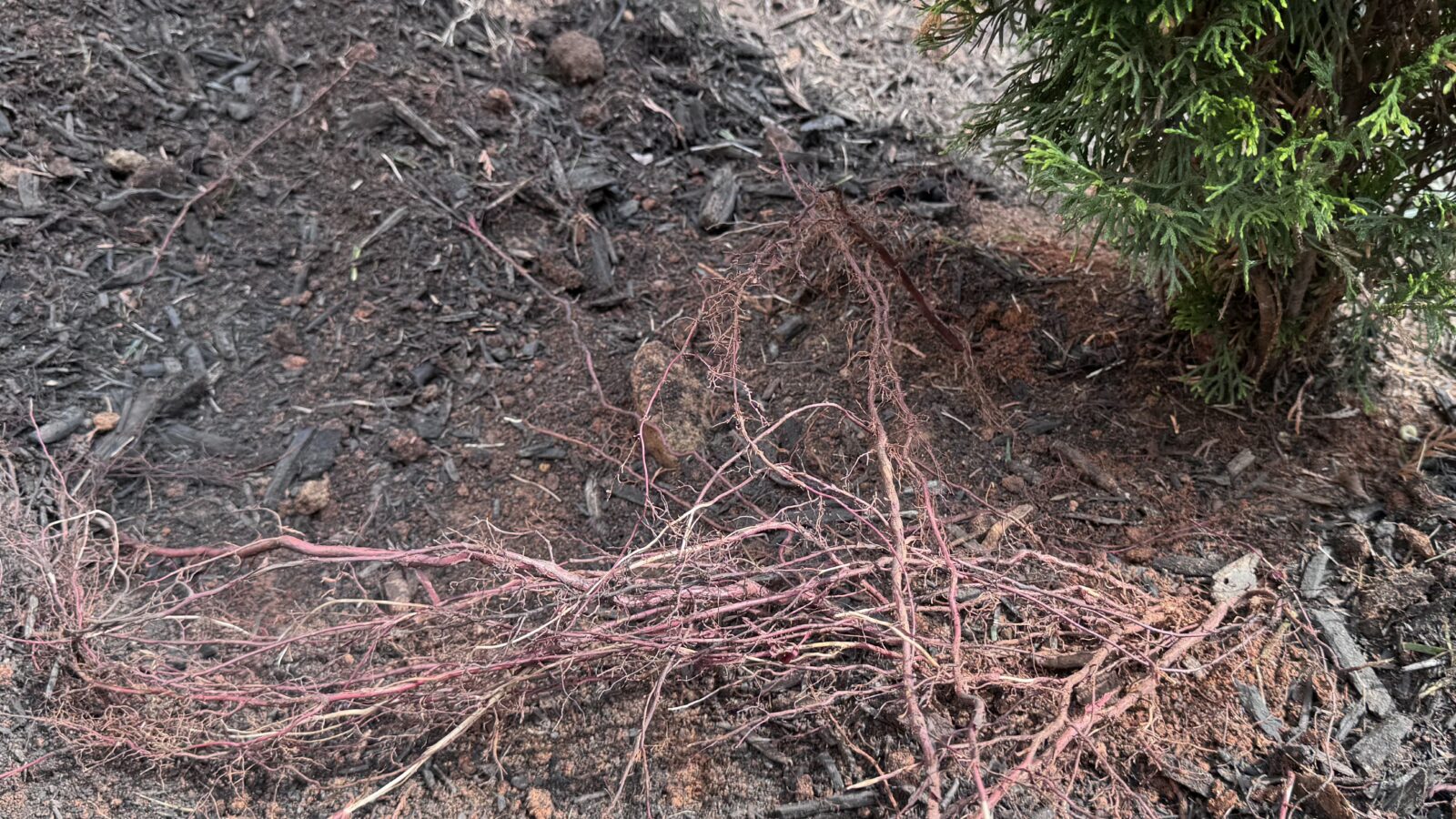
On this bed, we exposed an arborvitae’s feeder roots that had grown completely sideways, running across the soil surface like a network of pink threads instead of penetrating downward.
Why It’s Worse in Carolina Clay
The Charlotte region’s heavy clay soils make this failure mode more acute than it would be elsewhere. Carolina clay holds moisture longer than sandy or loamy soils, restricts root penetration more aggressively, and reacts more poorly to compaction.
The contrast between soil zones makes the problem worse. Above the fabric: loose, warm, oxygenated, nutrient-rich. Below the fabric: dense, compacted, oxygen-poor clay. The plant’s roots respond to that gradient in the only way they can. They stay where conditions are favorable, which means they stay shallow.
Plants installed in fabric-covered beds across Cabarrus, Stanly, Union, and Mecklenburg Counties show this pattern consistently. It isn’t bad horticulture from the homeowner. It’s the predictable result of a barrier that creates two completely different growing zones an inch apart.
Landscape Fabric Eventually Grows More Weeds
This is the part that frustrates homeowners the most. Landscape fabric is sold as a weed preventer. Within two to three years, it becomes a weed amplifier.
Here’s why: mulch breaks down on top of the fabric and creates a thin organic layer. Wind, birds, and rain deposit weed seeds into that layer. Those seeds germinate, root into the fabric weave, and become nearly impossible to pull because their roots are physically woven into the geotextile fibers.
What you end up with is a layer of weeds that’s harder to remove than weeds in bare soil would have been. The fabric you installed to prevent weeds is now hosting them, and you can’t get them out without destroying the fabric.
What Happens When Landscape Fabric Breaks Down
Even commercial-grade landscape fabric breaks down over time. UV exposure, biological activity, and freeze-thaw cycles all degrade the material gradually over five to ten years.
By the time the fabric is failing, the plants installed above it have grown root systems shaped by its presence. When the fabric finally breaks apart, the roots that grew through it get cut by the degrading fibers, or end up exposed when the surface erodes. Plants that have been quietly compromised for years suddenly show visible decline, and homeowners often misdiagnose the cause as drought, disease, or age.
What’s Under Old Landscape Fabric
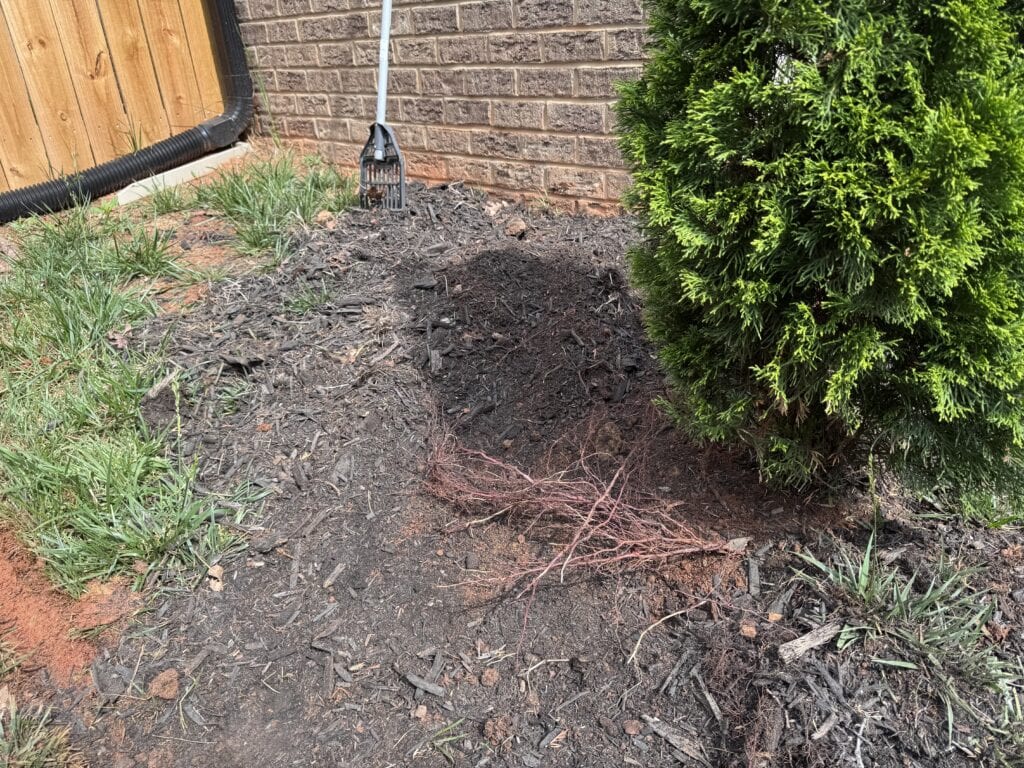
On a recent bed refresh in our service area, the homeowner had no idea anything was wrong. The arborvitae out front looked fine from the street. The boxwoods were holding their shape. The mulch was aged but not catastrophically so.
When we pulled the mulch back and exposed the landscape fabric, the problem was immediate. The fabric had grass and weed roots knitted completely through the weave, the mulch underneath had matted into a thin anaerobic layer, and the arborvitae’s feeder roots were running horizontally across the soil surface.
The plants looked fine above ground. Below ground, the root systems were already compromised, drought-vulnerable, and structurally weak.
How to Remove Old Landscape Fabric Without Damaging Plants
Removing landscape fabric without harming the plants growing in it requires a specific sequence. This is the same process we use on every bed refresh where fabric damage is present.
- Full fabric removal. Patching around it isn’t an option. The entire fabric layer has to come out, even where it’s torn or partially buried, because the root issues only compound where fabric remains.
- Root preservation. Surface roots get protected, not severed. Pulling fabric out forcefully will rip established feeder roots, and the plant won’t recover.
- Clay scoring. Once the fabric is out, we lightly dig and score the clay beneath the affected plants. This breaks the slick face of compacted Carolina clay so new feeder roots can penetrate downward instead of skating along the surface, the same way the original roots did along the fabric.
- Mulch integration. The remaining aged mulch gets spread thin across the bed as a base layer. It’s mostly decomposed organic matter at that point and adds soil tilth as it continues breaking down.
- Edge redefinition. A fresh spade-cut edge, four to five inches deep, gets re-established between bed and lawn. Vertical face on the bed side, sloped face on the lawn side.
- Fresh mulch top-dressing. Two to three inches of fresh hardwood mulch over the prepared base.
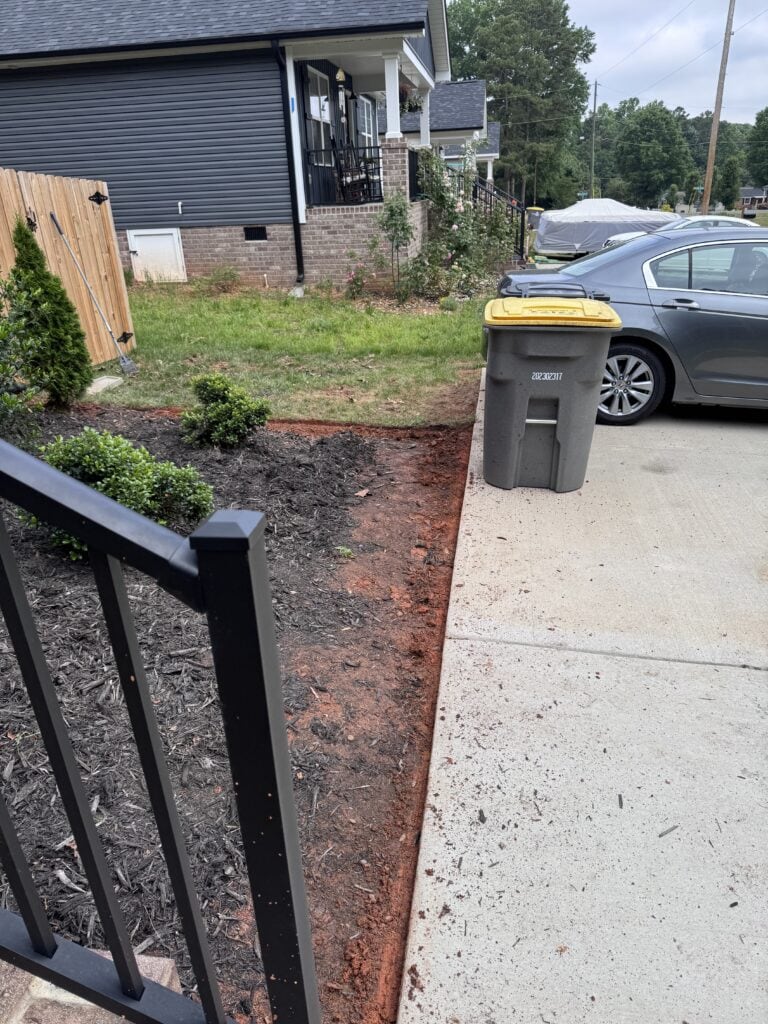
The whole sequence took a single working day. The plants that were compromised by the fabric now have the conditions they need to develop the root architecture they should’ve had from the start.
What to Use Instead of Landscape Fabric
For ornamental beds across our Stanly, Cabarrus, Union, and Mecklenburg County service area, the answer isn’t a better fabric. It’s no fabric at all, paired with the practices that actually suppress weeds and protect plants.
- Annual mulch refresh. A fresh two to three inch layer of hardwood mulch every spring suppresses 80 to 90 percent of weed germination on its own. No fabric required.
- Defined bed edges. A properly cut spade edge stops lawn grasses from invading the bed. Most weed problems in residential beds are actually lawn encroachment, not seed germination.
- Plant density. Sparse beds with lots of exposed mulch invite weeds. Layered plantings with appropriate spacing shade the soil and outcompete unwanted growth.
- Targeted hand-weeding. When weeds do appear, they pull easily from bare soil. Five minutes of hand-weeding once a month beats fighting fabric-rooted weeds for years.
This isn’t a more expensive approach over the long run. The maintenance demand is lower because you’re not fighting a barrier that’s actively working against you, and the plants stay healthier, which means fewer replacements over time.
Signs Landscape Fabric Is Hurting Your Plants
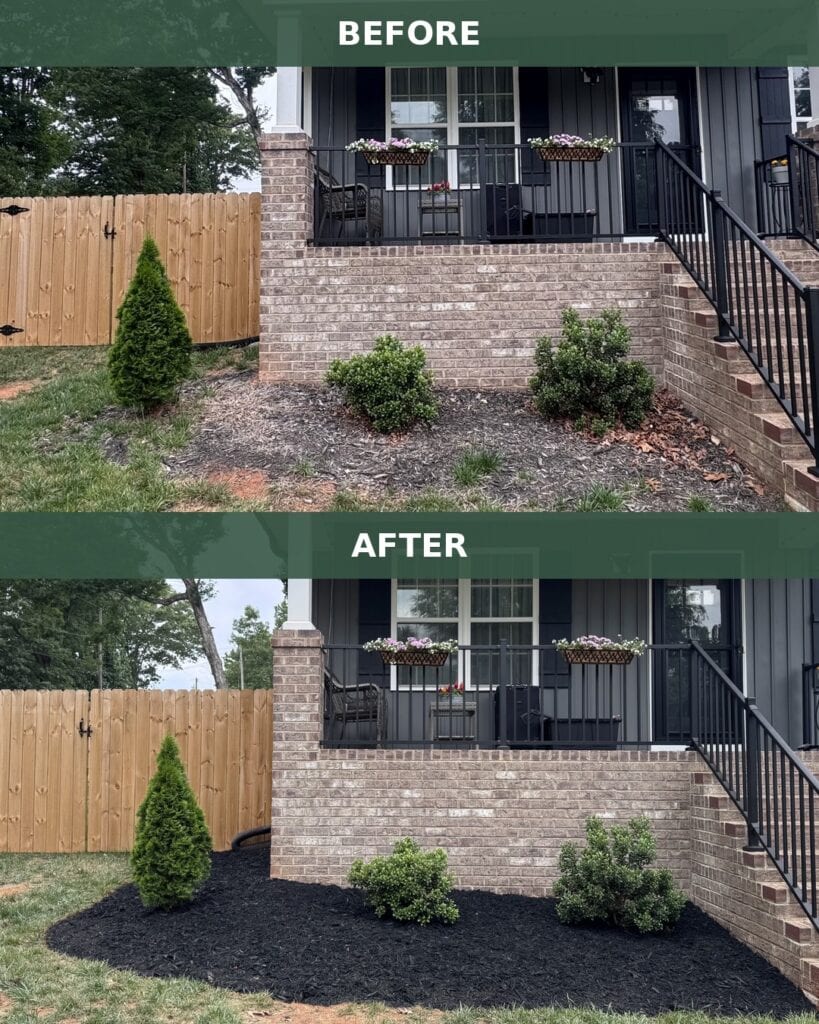
If you have foundation plantings installed within the last five to fifteen years, especially in newer developments across the Charlotte area, there’s a strong chance landscape fabric is underneath. Here are the signs to watch for:
- Plants that need more water than they should. Shallow roots dry out fast. If your foundation evergreens wilt or yellow during normal summer dry spells, the root system is likely shallow.
- Leaning evergreens. Especially arborvitae, junipers, and similar columnar species. Shallow root plates fail under wind load.
- Thin growth that doesn’t fill in. Plants that should be vigorous but stay sparse may be running on a compromised root system.
- Weeds that won’t pull cleanly. If you reach down to grab a weed and the root is woven into something fabric-like an inch or two below the mulch, you’ve found the problem.
- Visible fabric edges. Sometimes the fabric pokes out at bed edges or near hardscape transitions where the mulch has eroded.
Bed Refresh and Landscape Fabric Removal in Charlotte, NC
If you suspect landscape fabric is causing problems in your beds, you don’t have to wait for the visible decline to address it. The earlier the fabric comes out and the soil conditions get corrected, the more your plants will recover and develop properly.
Morrow Ridge handles bed refreshes, fabric removal, and full planting restorations across Stanly, Cabarrus, Union, and Mecklenburg Counties. Marine Veteran-owned and built on peak standards, clean prep, crisp lines, and a clear outcome with no surprises.
Schedule a bed assessment with Morrow Ridge.
Peak Precision, from the Ground Up.