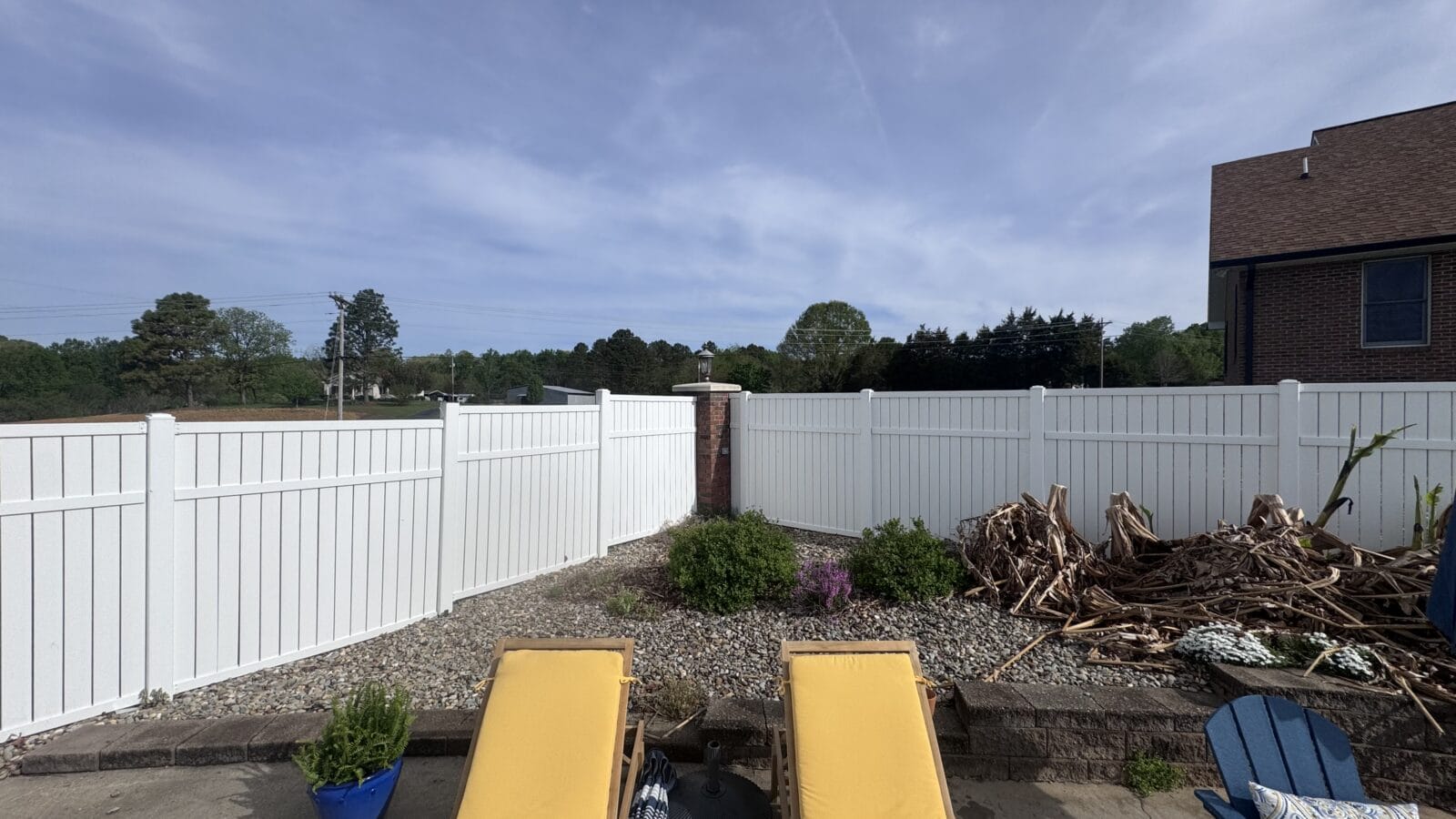
If your planter beds look flat, overgrown, or beaten down by another Carolina summer, a proper planter bed renovation is the single highest-impact project you can do for your property’s curb appeal. Tired beds drag everything else down with them. But a well-executed renovation — one that addresses the soil underneath, the drainage around it, and the plants going into it — creates a landscape that looks sharper the day it goes in and only improves with time.
This guide walks you through exactly how a professional bed renovation works in the Charlotte, NC area, from assessing what you have to selecting plants that thrive in Piedmont clay. Every recommendation below is grounded in university horticultural research and years of field experience in our region’s specific soil and climate conditions.
Table of Contents
Signs Your Planter Beds Need a Full Renovation
A seasonal mulch top-off is maintenance. A renovation is structural. Here is how you know it is time for the real thing:
- Soil has turned hard and compacted. When water sheets off the bed surface instead of soaking in, the soil structure has broken down. This is extremely common in Piedmont clay soils where organic matter has depleted over time.
- Plants are leggy, hollow in the center, or declining year after year. Overgrown shrubs that have been sheared into balls for a decade lose interior foliage and structural integrity. Perennials with dead centers need dividing or replacing entirely.
- Weed pressure is constant despite repeated treatments. If weeds dominate every season regardless of pre-emergent applications, the bed likely needs a full soil reset and proper barrier strategy.
- Bed edges have disappeared into the lawn. When turf creeps into the beds and mulch spills onto the grass, the entire bed loses definition and the property looks neglected.
- The original design no longer fits. Trees that were small at planting now cast deep shade. Sun-loving plants installed a decade ago are now failing in those conditions.
If two or more of these apply, a surface refresh will not solve the problem. The bed needs a ground-up renovation.
Step 1: Assess the Site Before You Touch a Shovel
A successful planter bed renovation starts with observation, not labor.
Sunlight Mapping
Walk the property at three different times of day and note where direct sun hits the beds. A bed that received full sun when originally planted may now sit under mature tree canopy. This single change is the most common reason ornamental plantings decline in established Charlotte neighborhoods. Your plant selections must match current light conditions, not what the builder’s plan assumed 15 years ago.
Drainage Check
NC State Extension recommends a simple field test: dig a hole approximately 10 inches deep in the bed, fill it with water, let it drain, then fill it again. If the second fill drains within 8 to 10 hours, drainage is adequate for most ornamental plants. If it drains in under an hour, the soil is too porous and will need organic matter to improve water retention. If it sits for longer than 10 hours, you may be dealing with subsoil compaction or a hardpan layer that requires deep tillage to break through.
Soil Testing
Before you amend anything, pull a soil sample and send it to the NC Department of Agriculture and Consumer Services (NCDA&CS) for analysis. This tells you your pH, nutrient levels, and organic matter content. The test is free from April through November. Most ornamental beds in the Charlotte area perform best at a pH between 5.8 and 6.5, depending on species. Amending blindly, without a soil test, wastes money and can create conditions worse than what you started with.
Step 2: Clear, Remove, and Define the Bed Edges
Remove What Is Not Working
Start at the center of the bed and work outward. Remove dead, diseased, or overgrown plants entirely, making sure to extract the full root system to prevent regrowth. If a shrub has been repeatedly sheared into an unnatural shape and has lost its interior branching structure, it is unlikely to recover with pruning alone. Replace it.
Identify any plants worth saving. Healthy perennials can be divided and temporarily staged on a tarp in the shade with their roots kept moist. Most perennials tolerate being out of the ground for a few days under these conditions, particularly in spring before peak heat arrives.
Strip Old Mulch and Debris
Remove the existing mulch layer down to bare soil. Old, decomposed mulch that has matted into a water-resistant layer is doing more harm than good. If landscape fabric was installed underneath (a common builder-grade shortcut), pull it out completely. Fabric prevents organic mulch from integrating with the soil and eventually creates a weed-trapping mat that is worse than bare ground.
Cut Sharp Bed Edges
Use a flat-edged spade or mechanical bed edger to re-establish a clean, defined separation between lawn and bed. This single step makes more visual impact than almost any other part of the renovation. Clean prep, crisp lines — that is the standard.
Step 3: Amend the Soil the Right Way for Carolina Clay
This is where most renovations either succeed or fail. The bed’s soil is its foundation. Skip this step and no plant selection or mulch choice will save the project.
What Works in Piedmont Clay
According to NC State’s Extension Gardener Handbook, the best organic matter amendments for clay soils in our region are pine bark fines (less than 3/4-inch diameter) and composted leaf mold. These materials reduce soil bulk density, create pore space for air and water infiltration, and improve overall tilth, which allows root systems to expand and establish.
The Handbook specifically advises against using peat moss, sand, hardwood bark, wood chips, or pine straw as clay soil amendments. Fine sand mixed into clay particles causes compaction and reduced aeration, essentially creating concrete. Compost, particularly well-finished compost, is the single most reliable amendment for heavy clay.
How Much to Apply
A proper soil conditioning targets approximately 25% organic matter by volume. In practice, this means incorporating a minimum of 2 inches of composted material into the top 6 inches of existing soil, creating roughly 8 inches of amended bed depth. NC State notes that these additions raise the planting bed above grade, which naturally improves drainage and makes plants more visible in the landscape.
In the warmer Piedmont region, organic matter breaks down faster than in cooler climates. NC State’s organic gardening research notes that soils in this area can require up to twice as much organic material as cooler environments to maintain the same level of improvement. This means annual mulch replenishment is not optional — it is structural maintenance.
Incorporate Lime or Sulfur Based on Your Soil Test
If your NCDA&CS report indicates the pH needs adjustment, now is the time. Lime raises pH (for acidic soils), and elemental sulfur lowers it (for alkaline conditions). NC State emphasizes that lime moves slowly through soil and should be thoroughly incorporated during renovation rather than surface-applied after planting. For beds that will include acid-loving plants like azaleas or blueberries, target a pH of 4.5 to 6.0.
Step 4: Choose Plants That Perform in the Piedmont
Plant selection is where the design either earns its keep or starts falling apart in year two.
Design Principles That Hold Up
NC State’s landscape design guidance recommends planting in groups or drifts rather than placing single specimens at random intervals. Repeated masses of a single species create visual unity and winter structure, even after deciduous plants drop their leaves. The old rule of “always plant in groups of three or five” is an oversimplification, but the underlying principle of massing is sound.
Layer your bed from tallest at the back to shortest at the front. Place plants with interesting foliage or evergreen structure as your anchors. Then fill gaps between structural plants with perennials and seasonal color.
Recommended Performers for Charlotte-Area Beds
Evergreen Structure (Backbone of the Bed)
- Distylium (various cultivars) for low-to-mid hedge
- Loropetalum (Purple Pixie, Purple Diamond) for color and form
- Dwarf Yaupon Holly for tight, formal edges
- Cleyera or Anise Tree for shade-tolerant screening
Perennial Color and Texture
- Lenten Rose (Helleborus) for late winter through spring bloom in shade
- Black-eyed Susan (Rudbeckia) for summer-to-fall sun performance
- Daylilies (Stella de Oro, Happy Returns) for reliable reblooming
- Muhly Grass or Switchgrass for fall texture and movement
Seasonal Annuals (for pocket planting)
- Pentas, Lantana, and Zinnias in summer sun pockets
- Pansies and Violas for fall-through-spring cool-season color
Choose named cultivars bred for disease resistance, heat tolerance, and known mature size. NC State’s Extension Gardener Plant Toolbox (plants.ces.ncsu.edu) is the best free resource for verifying that a plant is suited to your specific zone, soil, and exposure.
Step 5: Mulch, Edge, and Finish With Precision
Mulch Selection
Organic mulches are almost always the right choice for ornamental beds. They contribute nutrients and humus to the soil as they decompose, which continues to improve tilth and moisture retention over time.
For Charlotte-area beds, these are the top performing options:
- Shredded hardwood (double-ground): Apply 1 to 2 inches. Decomposes slowly and does not need replacement as frequently. Spread it thinly to avoid creating an impermeable layer.
- Pine bark nuggets (small to medium): Apply 2 to 3 inches. Dark color, good moisture retention. Be aware that large chunks can float during heavy rains.
- Pine needles (pine straw): Apply 2 to 3 inches. Excellent on slopes because the needles interlock and resist washout. Allows water and air to penetrate easily.
Application Rules
- Mulch the entire bed but keep material pulled back 2 to 3 inches from plant crowns and stems. Mulch piled against bark causes crown rot and invites pests.
- Do not use plastic sheeting under mulch. Water cannot penetrate plastic, and it creates anaerobic conditions that damage root systems.
- Replenish mulch in early spring to maintain consistent depth before the growing season hits full stride.
The Finish
A professionally renovated bed should have visible separation between lawn and mulch, uniform mulch depth with no plant crowns buried, and a layered planting design that reads as intentional from the street. This is the difference between a bed that looks maintained and one that looks designed.
When to Renovate: Timing Matters in Zone 7b/8a
Spring (March through mid-May) is the best general window for planter bed renovations in the Charlotte area. Soil temperatures are warming, rain is consistent, and new plantings have a full growing season ahead to establish root systems before summer heat and winter cold.
Fall (September through October) is the second-best window, particularly for planting shrubs and trees. Cooler air temperatures reduce transplant stress while soil warmth persists long enough for root growth.
Avoid renovating in the peak of summer (mid-June through August). Transplant shock is severe, water demands are extreme, and even well-installed plants struggle to establish under sustained 90-degree heat.
Common Mistakes That Kill a Bed Renovation
- Skipping the soil test. Without knowing your pH and nutrient baseline, you are guessing with every amendment and fertilizer application.
- Adding sand to clay soil. This creates a denser, more compacted mix. Compost is the correct answer for heavy Carolina clay, every time.
- Planting too deep. The top of the root crown must sit level with the surrounding soil grade. Burying the crown invites root rot and slow decline.
- Spacing plants based on nursery pot size, not mature size. A 3-gallon Loropetalum looks small today. In 3 years, it is 5 feet wide. Plan for the plant it will become, not the plant it is right now.
- Volcano mulching. Piling mulch into mounds against tree trunks and shrub bases is the fastest way to kill otherwise healthy plants. Keep mulch flat and away from bark.
- Using landscape fabric in ornamental beds. Fabric degrades, traps debris on its surface, and prevents the natural soil-mulch cycle that keeps beds healthy long term.
- Ignoring drainage. A beautiful bed installed in a low spot that holds standing water after every rain will fail regardless of plant quality. Address grading and drainage first.
DIY vs. Professional Planter Bed Renovation
A small bed refresh — pulling weeds, topping off mulch, adding a few annuals — is well within reach for most homeowners. But a full planter bed renovation that includes soil amendment, regrading for drainage, structural plant removal, and a cohesive design plan is a different category of work entirely.
A professional renovation addresses the problems you can see (overgrown plants, tired mulch) and the ones you cannot (compacted subsoil, incorrect pH, poor drainage below grade). The result is a bed built on a corrected foundation that performs for years, not a surface treatment that looks good for one season.
At Morrow Ridge Landscaping, every bed renovation starts with a site assessment, a soil analysis plan, and a clear scope of work before we break ground. We build beds to peak standards, from the soil up, because the finish is only as strong as the foundation beneath it.
University Resources and Further Reading
The horticultural recommendations in this guide are drawn from the following NC State University Cooperative Extension publications. These are free, research-backed resources available to any North Carolina homeowner:
- Soils and Plant Nutrients (Extension Gardener Handbook, Chapter 1) — content.ces.ncsu.edu
- Herbaceous Ornamentals (Extension Gardener Handbook, Chapter 10) — content.ces.ncsu.edu
- Landscape Design (Extension Gardener Handbook, Chapter 19) — content.ces.ncsu.edu
- Organic Gardening (Extension Gardener Handbook, Chapter 17) — content.ces.ncsu.edu
- NC State Extension Gardener Plant Toolbox — plants.ces.ncsu.edu
- NCDA&CS Soil Testing Services — ncagr.gov
Ready to Renovate Your Beds the Right Way?
If your planter beds have been holding your property back, it is time to address the foundation, not just the surface. Morrow Ridge Landscaping serves homeowners across Stanly County, Cabarrus County, and the greater Charlotte corridor with bed renovations built on proper soil science, intentional plant design, and clean execution.
Schedule Your Free Bed Renovation Consultation →
Peak standards from the ground up.
Morrow Ridge Landscaping is a Veteran-owned, premium landscaping and hardscape company serving Albemarle, Concord, Mt. Pleasant, and the surrounding Charlotte, NC area. Licensed pesticide applicator. Insured and committed to doing it once and doing it right.