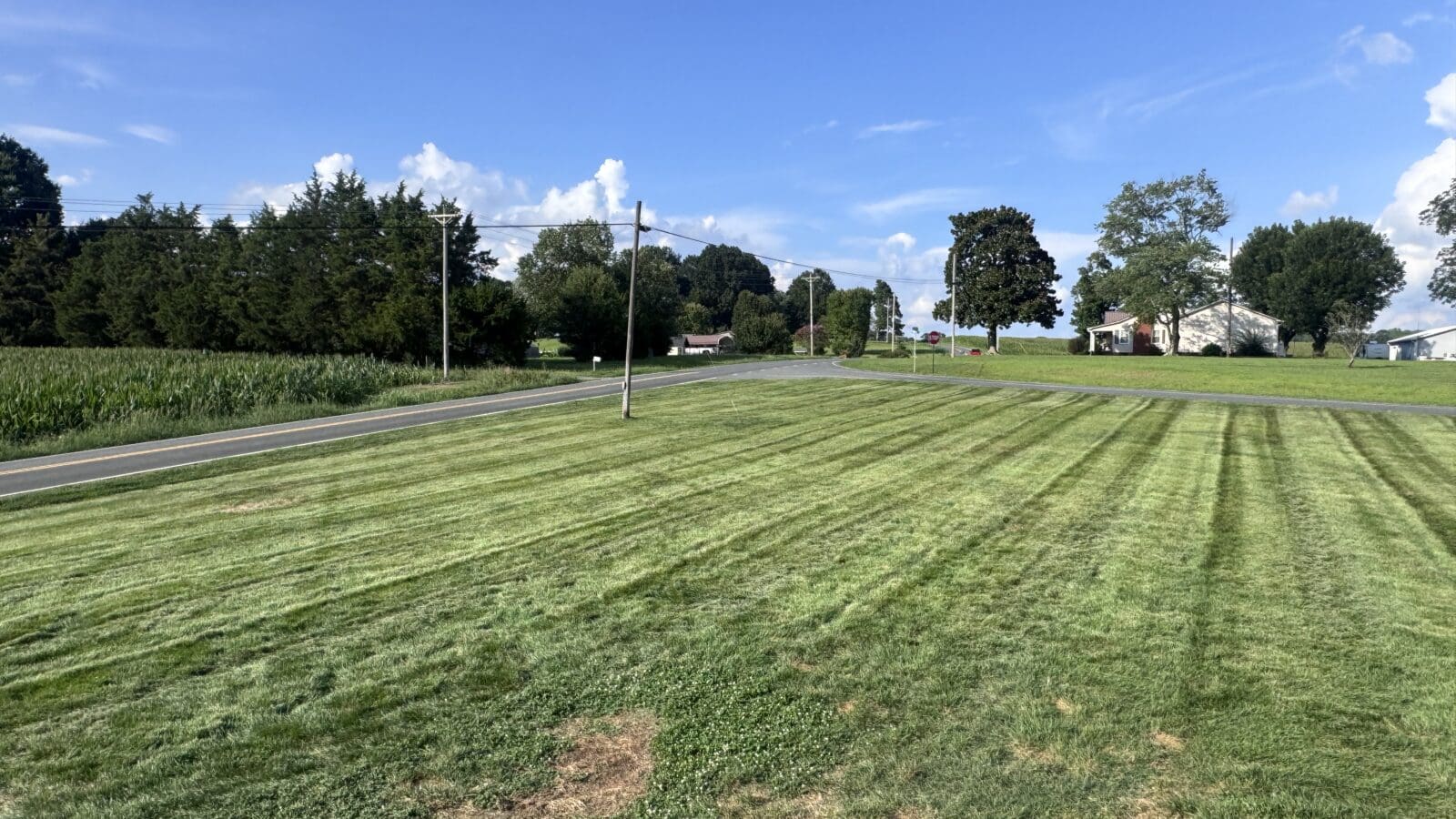
How to Know Which One Your Albemarle, NC Lawn Needs
Peak Precision, from the Ground Up.
| Quick Answer Aeration and overseeding supplements a lawn that still has a healthy base. Full renovation replaces a lawn that has lost one. The dividing line is how much living, desirable turf remains. Roughly 70 percent or more, overseed. Under 40 percent, or weeds and bermudagrass scattered throughout, renovate. Between those, it depends on what caused the decline. |
Two houses on the same road outside Albemarle can have lawns that look identical from the street in August. Both thin, both patchy, both tired. One needs an aeration and overseeding pass. The other needs a full renovation and will burn the entire fall window if it gets the lighter service.
The photo does not tell you which is which. The stand does.
Here is how we make that call on properties in Albemarle, Concord, Locust, and around Lake Tillery, what the research supports, and how to run the test yourself before you call anyone.
Overseeding Adds to a Lawn, Full Renovation Replaces One
Every other decision follows from this one. Tall fescue is a bunch type grass. It does not spread laterally to fill bare ground, so every square inch of turf you want has to either already be there or be planted.
That means overseeding is addition. It puts new plants into gaps between existing plants. It works when there are existing plants worth keeping.
Renovation is replacement. It clears the site and starts the stand over. Both fall under Seeding and Turf Renovation, inside our our full service line service line.
If you overseed a lawn that needed renovation, you are adding seedlings into a competition they will lose. The weeds, the compaction, and the bermudagrass that beat the last stand are still there, and they will beat this one too.
How to Tell If Your Lawn Needs Overseeding or Full Renovation
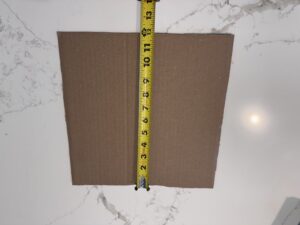
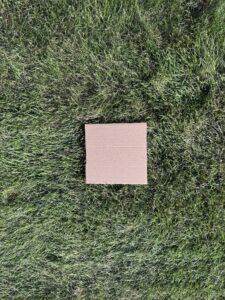
Cut a one foot square out of cardboard. It is not a frame to count inside. It is a ruler.
Almost nobody has a calibrated sense of what a square foot of turf actually looks like, and that is exactly why thin lawns get described as fine. With a known size sitting on the ground, the guessing stops.
Drop it in five spots across the lawn: two in the worst areas, two in the average areas, and one in the best area. At each drop, look at the ground immediately around the square and estimate what share is living, desirable fescue and what share is weeds, bare soil, moss, or grass you did not plant. The square keeps your eye honest about how much ground you are actually judging.
Average the five. That number is your starting point.
70 Percent or More Desirable Turf: Aeration and Overseeding
Aeration and overseeding. The stand is intact. The thinning is almost certainly compaction, mowing height, or fertility, not stand failure. Core aeration relieves the compaction, and seed dropped into fresh holes fills the gaps.
40 to 70 Percent Desirable Turf: It Depends on the Cause
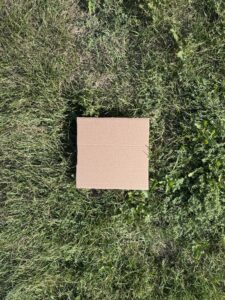
The middle zone, and where judgment matters. This can go either way depending on the cause. If the loss came from a summer disease cycle in an otherwise sound lawn, aggressive slit seeding at a heavier rate will bring it back, sometimes over two consecutive falls. If the loss came from weed pressure that is now established, seeding into it is a holding action at best.
This is the range where walking the property changes the answer, and where most contractors default to the easier service.
Under 40 Percent Desirable Turf: Full Renovation
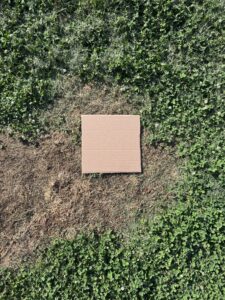
Full renovation. There is not enough living turf to build around. Seeding into 30 percent coverage means 70 percent of your seed is landing in ground that is already occupied by something else.
Five Conditions That Force a Full Renovation
Some conditions decide the answer regardless of how the square foot test comes out.
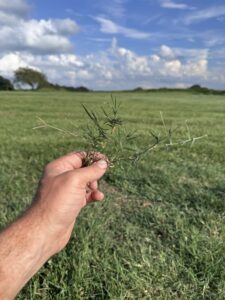
1. Bermudagrass or perennial grassy weeds scattered throughout. This is the clearest override there is. NC State Extension guidance is direct: controlling bermudagrass takes several non selective applications spaced three to four weeks apart, and when perennial grassy weeds are scattered throughout the lawn, the recommendation is to consider killing the entire lawn. You cannot selectively remove bermuda from fescue. Overseeding around established weed pressure just feeds the problem another year.
2. Thatch over three quarters of an inch. NC State sets that as the threshold for power raking and coring. Seed landing on a thick thatch layer never contacts soil, and never germinates. Thatch removal comes first either way.
3. Deep shade. Fescue tolerates medium shade. It does not tolerate a mature hardwood canopy, and there is a lot of mature hardwood on the older lots in Albemarle and along the Lake Tillery shoreline. Neither service fixes this. Those properties need canopy work, a bed conversion, or a shade tolerant planting plan.
4. Standing water or an unresolved drainage problem. Seed germinates in a wet swale and then rots. Grading and drainage come before seed, not after.
5. The cause was never diagnosed. NC State frames renovation correctly: a deteriorated lawn is a symptom, and the underlying cause must be corrected before the renovation process begins. Failure to identify the exact problem leads to further deterioration and repeated renovation. If nobody has told you why the lawn declined, you are not ready to buy either service.
A lawn with either of the first two findings gets renovated. A lawn with either of the next two gets neither until the site is corrected.
Aeration and Overseeding vs Full Lawn Renovation: Side by Side
| Aeration and Overseeding | Full Renovation | |
| What it does | Relieves compaction, adds seed into an existing stand | Clears the site and establishes a new stand |
| Typical scope | Double pass core aeration, broadcast or slit seeding, starter fertility, mesotrione at seeding | Vegetation control, thatch removal, aggressive aeration, soil amendment, slit seeding, starter fertility, mesotrione at seeding |
| Corrects | Compaction, gradual thinning, minor bare spots | Weed dominance, bermuda encroachment, failed stands, severe thinning |
| Does not correct | Weed dominance, bermuda, shade, drainage | Shade, drainage, grade problems |
| Lead time before seeding | Roughly two weeks | Six to eight weeks, driven by herbicide intervals |
| Right when | 70 percent or more desirable turf remains | Under 40 percent, or perennial grassy weeds scattered throughout |
Why a Full Lawn Renovation Has to Start in August in the NC Piedmont
This is the part that surprises people, and it is the reason a renovation decision made late in September usually becomes an overseeding job by default.
Herbicide intervals are not flexible. NC State advises that most selective post emergent products for annual grassy weeds go down at least four weeks before seeding. Bermudagrass control takes several non selective applications spaced three to four weeks apart. When a translocating non selective is used, coring and tillage should wait seven days so the product can move into the root system.
Stack those intervals against the seeding window and the math is tight. NC State places optimum piedmont seeding between September 1 and September 15, and TurfFiles sets the practical outside edge at mid October, because germination slows sharply after that.
Work backward from a mid September seeding and the first vegetation control application goes down in mid August. That makes early August the assessment window, not the work window. Aeration and overseeding can be scheduled with about two weeks of notice.
When to Seed Inside the September 1 to October 15 Window
Our working window runs September 1 through October 15. That is six weeks, and it is wider than the extension optimum on the front end and matched to TurfFiles on the back end. Within those six weeks, timing is not neutral.
Results skew toward the back half. Early September in Stanly County still runs warm. Soil temperature is frequently in the upper 70s, nights stay humid, and brown patch is still active in fescue. Seed dropped into that stretch can germinate directly into disease pressure with no root system to absorb it. Once night temperatures break in mid September, soil moderates, pathogen pressure falls off, and seedlings establish with far less loss.
That does not close early September. In a cool year with a mild August, a September 1 seeding comes in clean and gets a longer runway before dormancy. The decision is made on soil temperature and disease pressure at the property, not on the calendar.
October 15 is a hard deadline, not a soft one. Seed later than that and the stand goes into winter without enough tillering to survive it. Both edges of the window are real, but only one of them is negotiable.
If a contractor quotes you a seeding date without checking soil temperature, that is a calendar decision, not an agronomic one.
| WHERE THE CALENDAR SITS RIGHT NOW It is the first week of August. Renovation kill offs start in about two weeks, which makes the next fourteen days the assessment window. Get the property walked and the soil test submitted now and the first application goes down on schedule. Aeration and overseeding needs roughly two weeks of notice and can be scheduled later in the window. If you are weighing this, the assessment is the thing to schedule now. Request a fall property assessment or call 704.448.9015. |
The Morrow Ridge Process for Aeration, Overseeding, and Full Renovation
Shared First Steps: Assessment, Soil Test, and Utility Marking
Property assessment. We walk it before we quote. Compaction check, thatch depth, shade mapping, drainage patterns, mowing height, disease history, and a weed inventory. This is where the percentage call gets made, and it is not made from a photo.
Soil test. pH, phosphorus, potassium, and lime requirement before we spend a dollar on fertility. The NCDA and CS Agronomic Division analyzes samples free of charge from April 1 through late November, with a peak season fee beginning December 1. Fall renovation sits inside the free window.
Clay soils across Stanly and eastern Cabarrus commonly run acidic. Seed planted into a pH of 5.2 germinates and then stalls, because the nutrients already in the soil are chemically unavailable to it. Correcting that sits inside our Lawn Treatments program.
Utility and septic marking. Most properties out here are on septic rather than municipal sewer, and a core aerator does not care where your drain field lines run. Before any machine moves, we mark irrigation heads, shallow lines, utility and cable runs, and septic lines. This is standard NC State guidance and it is not optional on a rural lot.
If the Call Is Aeration and Overseeding
- Mow low and bag to reduce canopy competition and expose soil.
- Confirm all markings.
- Double pass core aeration in opposing directions. Single pass in clay is a gesture. Cores stay on the lawn and reincorporate in two to four weeks.
- Seed into the fresh holes, slit seeding the thinner sections.
- Starter fertility and mesotrione at seeding, then the written watering, mowing, and herbicide schedule.
If the Call Is Full Renovation
- Vegetation control scheduled first, on the interval the target weed requires.
- Wait the label interval. This is the step that gets skipped, and skipping it is why renovations fail.
- Thatch removal where depth exceeds three quarters of an inch.
- Aggressive aeration, soil amendment or topdressing as the soil test directs.
- Slit seeding at establishment rate. NC State lists 6 pounds per 1,000 square feet for establishing tall fescue, and TurfFiles cites a typical 5 to 6 pound range.
- Starter fertility and mesotrione at seeding, written establishment schedule, and a scheduled follow up walk at the 30 day herbicide timing.
On seeding rate, more is not better. Carolina Lawns is explicit that higher rates produce weak, thin stands that are more disease susceptible, because seedlings compete with each other for the same water and light. On acreage lots, that mistake gets expensive fast. Cultivar performance data is published on TurfFiles.
Weed Control on New Grass Seed: The Mesotrione Program
Here is the part that separates a licensed program from a seed drop.
Conventional wisdom says you cannot touch a new fall seeding with herbicide until it has tillered and been mowed several times, which leaves the stand defenseless through its most vulnerable weeks. That is true of most chemistries. Young seedlings are damaged by products a mature stand shrugs off.
Mesotrione is the exception. It is the one active ingredient rated safe to apply at the time of seeding on most cool season grasses, including tall fescue and Kentucky bluegrass. It binds in the top inch of soil and holds roughly 21 days of pre emergent suppression while your seed germinates underneath it.
That gives us a three step program instead of a three month gap.
- At seeding. Mesotrione goes down with the seed, suppressing germinating broadleaves and grassy weeds during establishment.
- Roughly 30 days later. A second application as the residual runs out. University trial work on sequential mesotrione timings in seedling tall fescue found groundcover reductions of only four to six percent compared to untreated turf, which is a small trade for keeping weeds out of an open stand.
- At roughly 60 days. The turf is established enough for a conventional pre emergent at full rate, which carries the lawn through winter annual germination and into spring.
| Two Things Worth Stating Plainly Fine fescue is the label exception. Mesotrione can thin fine fescue seedlings, so at seeding use is not labeled for it, though blends carrying under 20 percent hard or fine fescue by weight are fine. If your shade mix is fine fescue heavy, the program changes. This is licensed applicator work, not a bag off a shelf. Rate control, sequential timing, and label compliance are the difference between a clean stand and a bleached one. Morrow Ridge holds an NC pesticide applicator license and the program is written into your scope before the seed goes down. Clear outcome, no surprises. |
What this program does not do is eliminate every weed on the property. Pre emergent does nothing to weeds already established, and it does not cover every species. What it does is close the window that normally leaves a fall seeding wide open until March.
Watering and Mowing New Grass Seed: The First 30 Days
We can execute either path at peak standards and still lose the stand on water. This matters more here than in a subdivision, because a lot of these properties are on well water and irrigating an acre of new seed is a real commitment. After five drought events in five years across our service counties, we plan it in writing. Our NC drought guide covers the longer term watering picture.
- Weeks 1 to 2: Light, frequent cycles. The seedbed should never fully dry. It should also never sit saturated.
- Weeks 3 to 4: Fewer cycles, longer duration. This is what drives roots down instead of holding them at the surface.
- After the third mowing: Deep watering, roughly six inches of soil depth, less often.
- Mowing: Sharp blade every time. A dull blade tears seedling crowns rather than cutting them. Mowing frequency matters as much as the blade, and ongoing lawn care and maintenance keeps the height right.
- Traffic: Off the lawn. Kids, dogs, and equipment on three week old seedlings undo the work.
Germination typically runs 10 to 21 days with adequate moisture and soil temperature above 60 degrees.
Underwatering ends more fall renovations in this region than disease, insects, and seed quality combined.
Fall Seeding Timing for Albemarle, Concord, and Stanly County, NC
| Timeframe | Renovation Path | Overseeding Path |
| Early August | Assessment and soil test | Assessment and soil test |
| Mid August | First vegetation control application | Post emergent applications complete |
| Early September | Second application if bermuda is present | Monitor soil temperature |
| Mid September | Thatch removal, prep, aggressive aeration | Mow low and bag, double pass aeration |
| September 1 to October 15 | Seeding window | Seeding window |
| September 15 onward | Strongest results, lower disease pressure | Strongest results, lower disease pressure |
| After October 15 | Closed. Book for next fall | Closed. Book for next fall |
| At seeding | Mesotrione, starter fertility, establishment watering | Mesotrione, starter fertility, establishment watering |
| Roughly 30 days after seed | Second mesotrione application | Second mesotrione application |
| Roughly 60 days after seed | Full rate pre emergent | Full rate pre emergent |
| Late fall | Nitrogen program for root development | Nitrogen program for root development |
Our primary markets are Albemarle, Concord, Locust, and the Lake Tillery shoreline. Beyond those we work Mt. Pleasant, Oakboro, Norwood, Badin, Stanfield, Richfield, New London, Misenheimer, and Midland, along with the smaller Stanly County townships in between, including Millingport, Palestine, Aquadale, and Red Cross. The full list is on our service area page.
We are based in unincorporated Stanly County, inside the triangle formed by Mt. Pleasant, Albemarle, and Locust, which puts all three within about fifteen minutes of the shop. Lake Tillery properties are a particular focus. Shoreline lots carry grade running toward the water, thinner fill soil in places, and irrigation demands that a standard subdivision program does not account for.
What We Will Not Sell You on a Fall Renovation
- We will not overseed a lawn with bermudagrass scattered through it and call it a solution.
- We will not seed over an unresolved drainage problem.
- We will not aerate and seed under a mature canopy and tell you it will hold.
- We will not sell a spike aeration pass. Spike aeration is not recommended, because driving a solid tine through clay compacts the soil further rather than relieving it.
- We will not book a renovation we cannot prep correctly just to fill a route. If the herbicide intervals will not fit before October 15, we will say so and put you on next fall schedule.
Frequently Asked Questions About Aeration, Overseeding, and Lawn Renovation
When should I aerate and overseed in North Carolina?
Our working window in the Stanly County area is September 1 through October 15. NC State publishes September 1 to 15 as the piedmont optimum. Results skew toward the back half of the window, because early September soil often still runs warm enough for brown patch to be active. After October 15 the stand will not tiller enough to hold through winter.
Is it too late to overseed in October?
Not until October 15. That is the working deadline in our area. Seed going down inside that window still has enough warm soil to germinate in 10 to 21 days and enough growing time to tiller before dormancy. Past October 15, the correct answer is to wait for next fall rather than waste the seed.
Do I need to aerate before overseeding?
Yes, in Carolina clay. Seed needs direct contact with soil to germinate, and compacted clay gives it nowhere to go. Core aeration opens holes that catch seed and hold moisture. Skipping aeration is the most common reason a broadcast overseeding fails to fill in.
How long does grass seed take to germinate?
Tall fescue typically emerges in 10 to 21 days when moisture is consistent and soil temperature stays above 60 degrees. Cooler soil or an inconsistent seedbed pushes that longer. Visual density keeps improving through fall and again the following spring as the stand matures.
How much grass seed do I need per 1,000 square feet?
NC State lists 6 pounds per 1,000 square feet for establishing tall fescue, and TurfFiles cites a typical range of 5 to 6 pounds. Overseeding an existing stand runs lighter. Do not exceed the rate. Heavier seeding produces weak, thin, disease susceptible turf because seedlings compete with each other.
What percentage of weeds means I should renovate instead of overseed?
Under 40 percent desirable turf, or perennial grassy weeds like bermudagrass scattered throughout, means renovation. Above 70 percent desirable turf means overseeding. Between 40 and 70 percent, the answer depends on the cause. Disease damage in a sound stand recovers with heavy slit seeding. Established weed pressure does not.
Can I aerate and overseed in the spring instead of fall?
You can aerate. Seeding is different. Spring established fescue enters its first summer with an immature root system and is markedly more vulnerable to drought, heat, fungal disease, and weed encroachment. NC State does not recommend spring seeding of tall fescue outside the mountain region.
Can I just overseed every year instead of renovating once?
Sometimes, and for many sound lawns that is the right program. But annual overseeding into a stand that keeps losing ground is treating a symptom. If you have overseeded three years running and the lawn is still thinning, the underlying cause was never corrected.
Should I rake up the soil cores after aeration?
No. Leave them on the lawn. The cores break down and reincorporate within two to four weeks, and they accelerate thatch breakdown by carrying soil microbes up into the thatch layer as they go.
Will I have to live with weeds all fall until the new grass is established?
No. That is the standard answer and it is outdated. Mesotrione is labeled for application at the time of seeding on tall fescue and Kentucky bluegrass, followed by a second application around 30 days and a full rate pre emergent at roughly 60 days. Fine fescue heavy blends are the exception.
Is aeration safe if my lawn is on a septic system?
Yes, when the drain field is located and marked first. Aeration tines reach only the top few inches of soil, well above a properly installed field. The marking has to happen before the machine starts, not after. Most properties in Stanly County are on septic rather than municipal sewer.
Will new grass seed survive a Carolina clay lawn that has never been amended?
It can, but the soil test decides. Piedmont clay commonly runs acidic enough that nutrients already present are chemically unavailable to the plant. Seed planted into a pH of 5.2 germinates and then stalls. Correct pH and fertility first, then seed.
How do I know a contractor made the right call on my lawn?
Ask them what caused the decline. If the answer is a service name instead of a diagnosis, keep looking. A correct recommendation starts with why the stand failed, not with which service is on the truck that week.
Book Your Fall Property Assessment in Albemarle, Concord, or Locust
The seeding window runs September 1 through October 15 and it does not move. If the answer turns out to be full renovation, the herbicide intervals ahead of seed take four to six weeks, which puts the first application in mid August. The assessment is the piece that has to happen now, because the recommendation decides the schedule.
We assess the property, diagnose what actually caused the decline, and give you a written plan with the path, named cultivars, specified rates, and a clear scope. If your lawn does not need either service this year, we will tell you that instead.
| NEXT STEP Schedule your fall property assessment with Morrow Ridge Landscaping. Peak Precision, from the Ground Up. |